
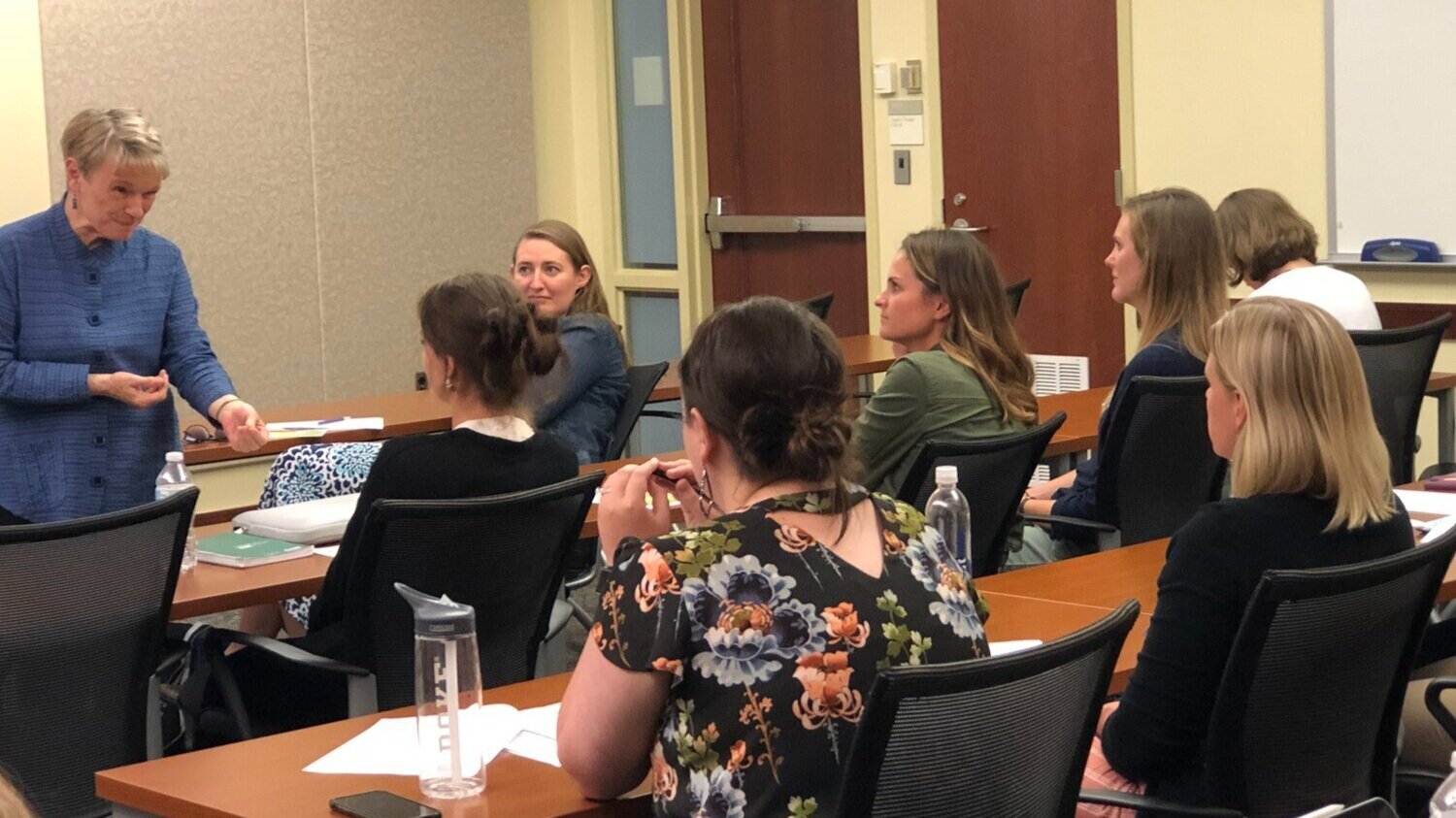

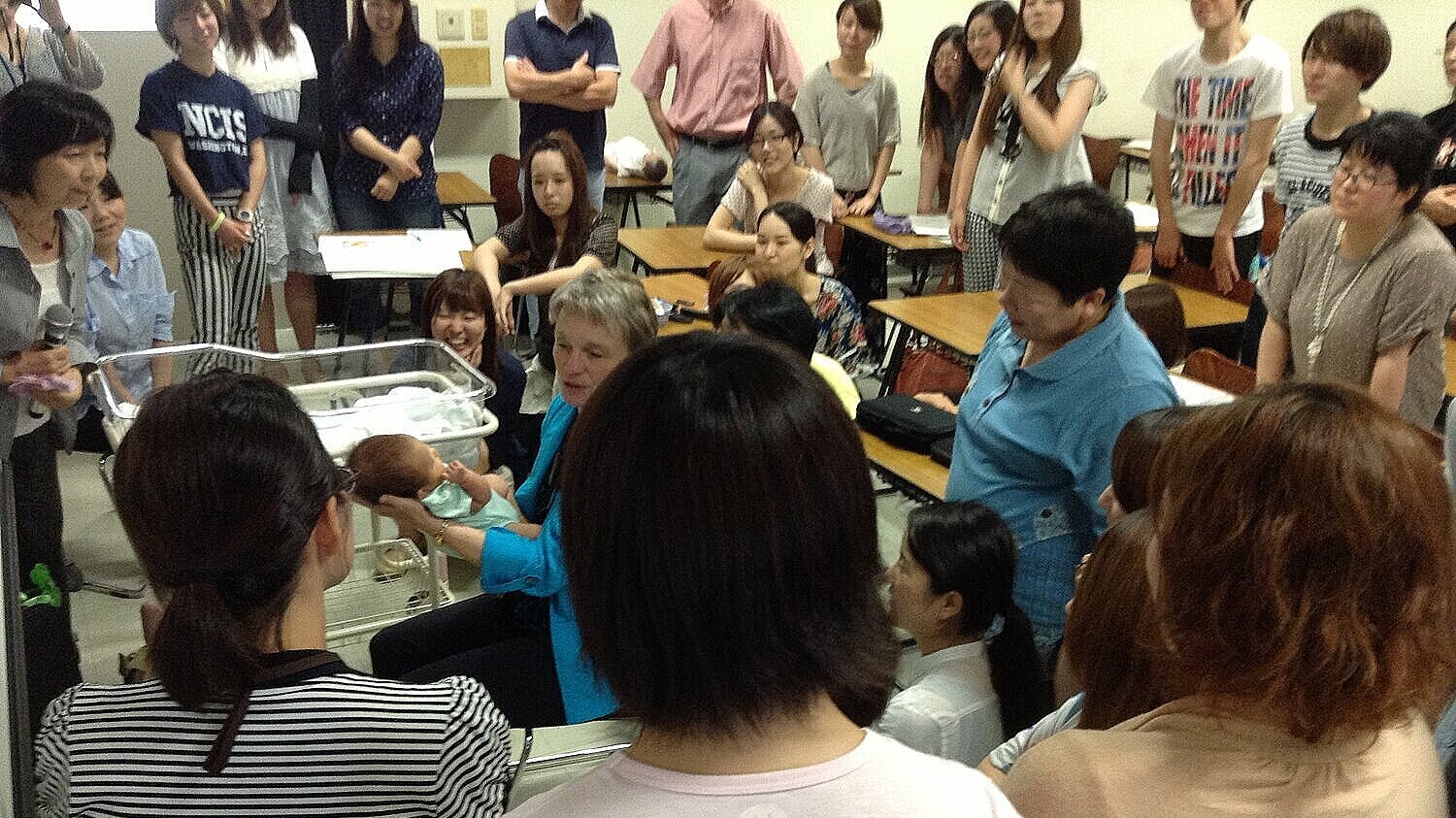
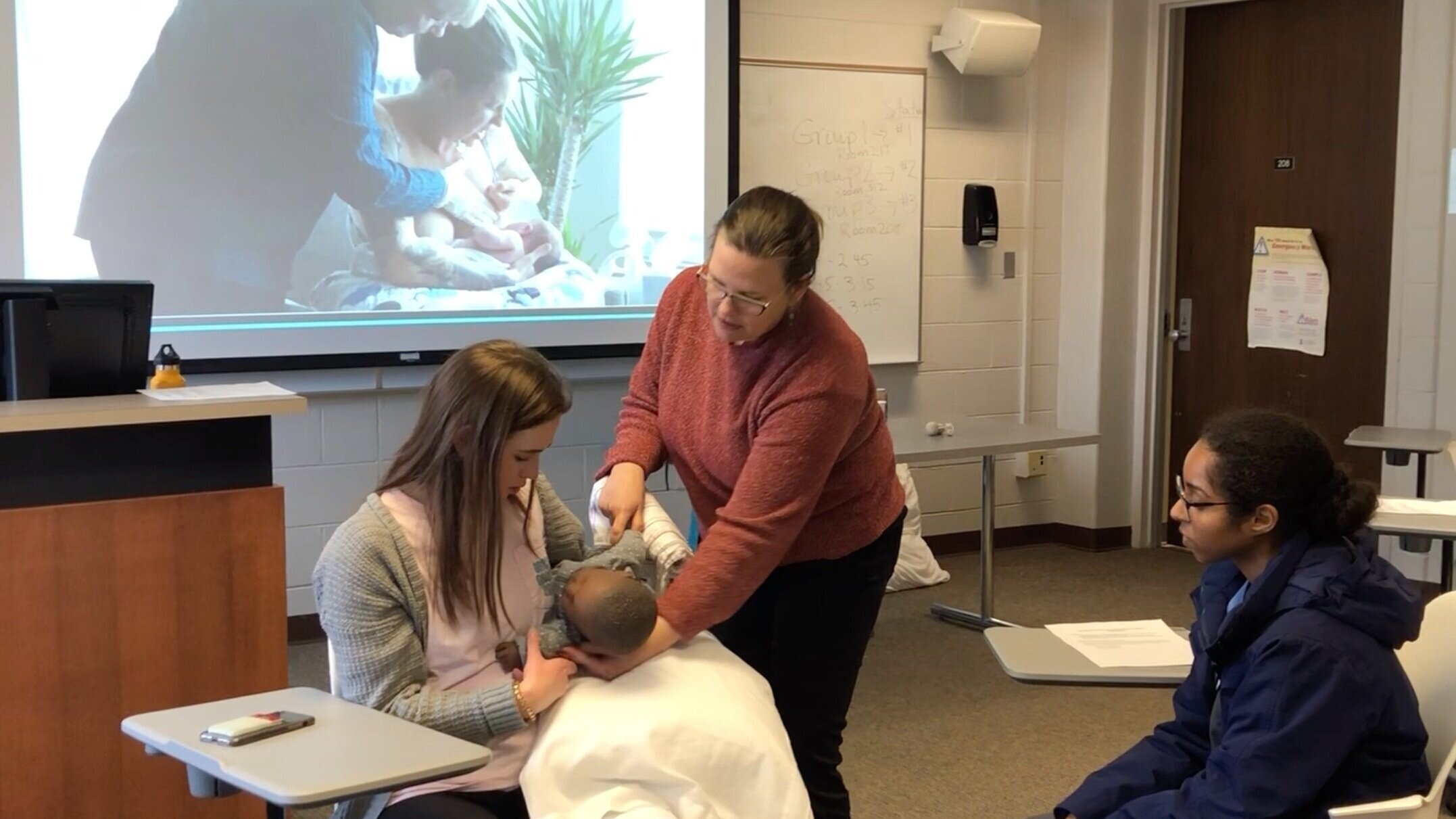
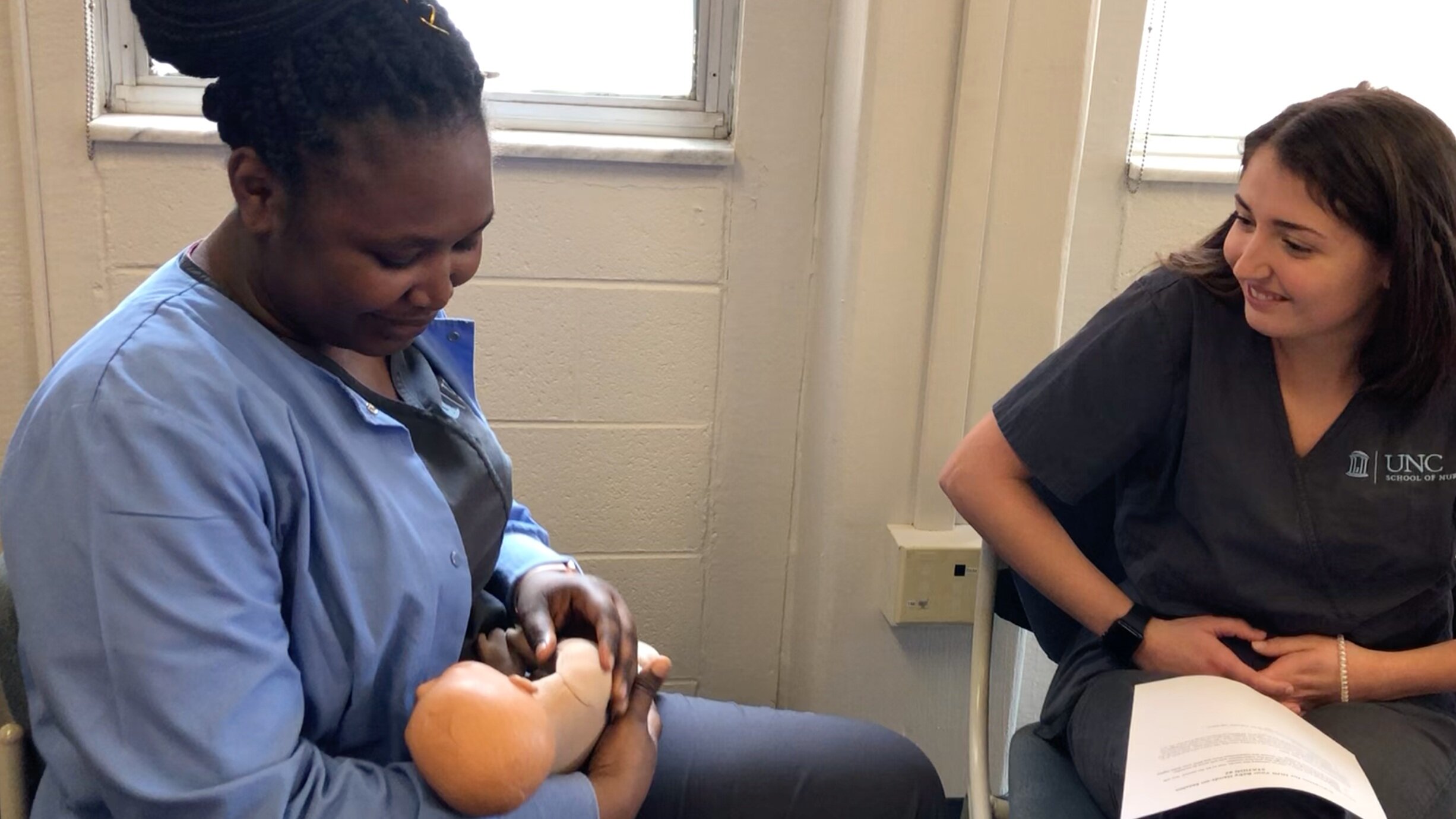
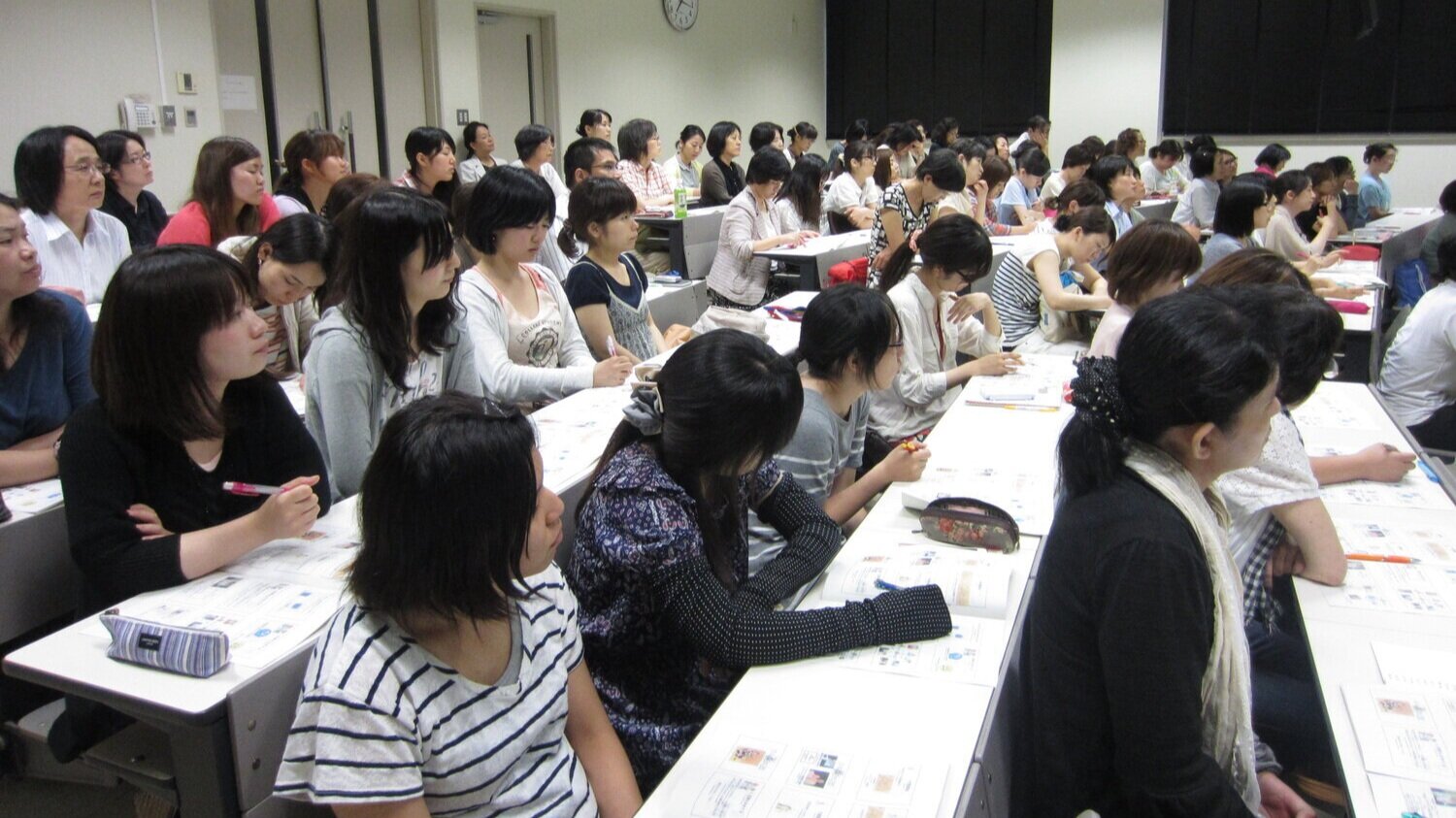
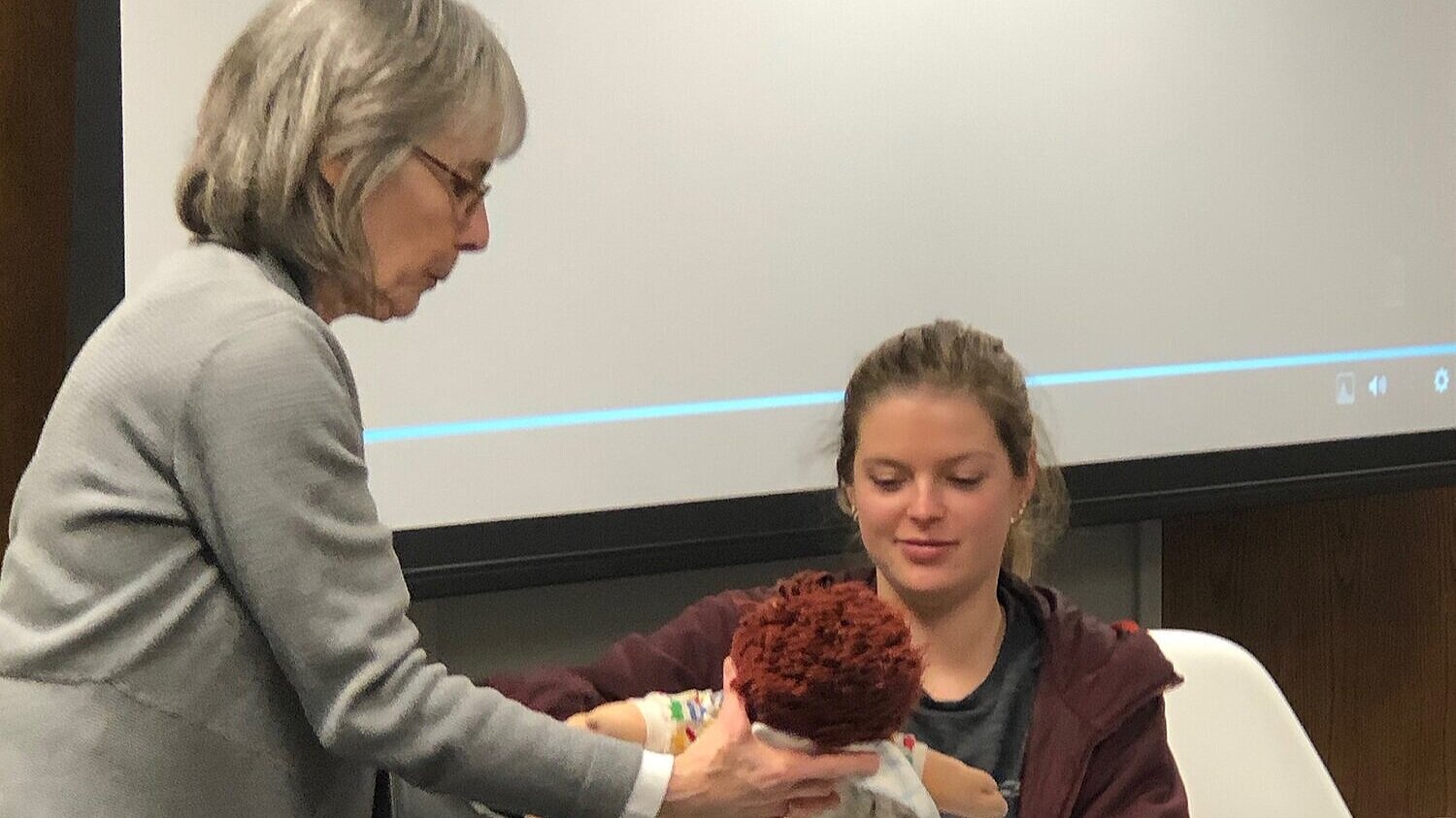
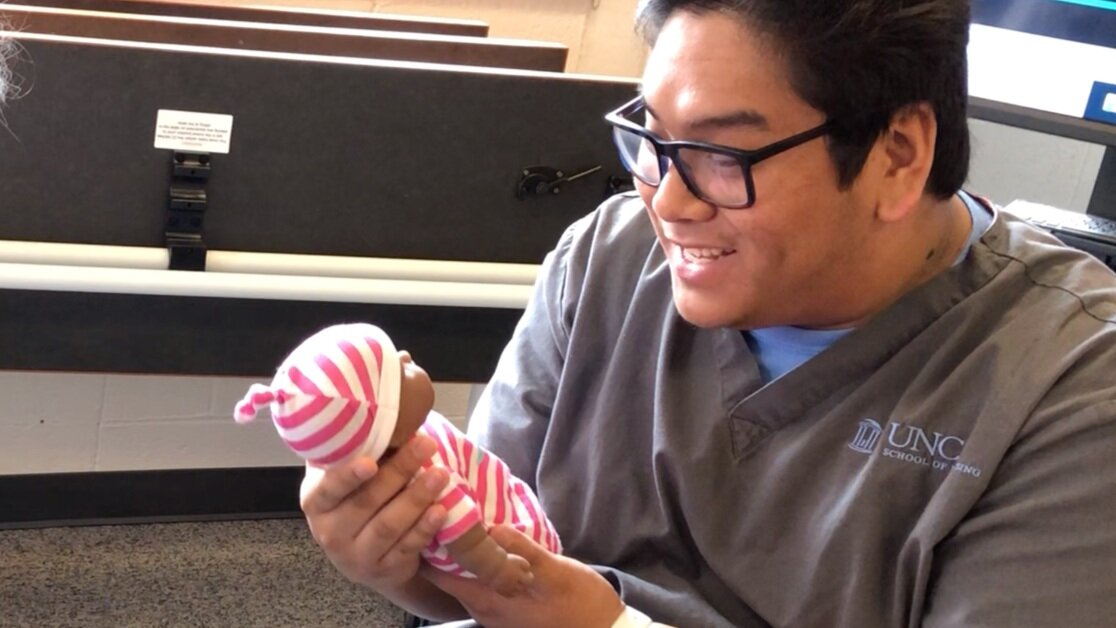
Consider benefits of adding “Birth, Breastfeeding and Beyond”—a two-hour digital course—to your curriculum.
Watch to learn how our evidence-based, digital course teaches maternity and pediatric nursing students how to counsel parents with babies birth to one year.
HUG Training and Resources:
Utilize Engaging parent-child videos, inspiring case studies and memorable graphics
Depict Multicultural and inclusive images
address diverse learning styles
Provide tests and course evaluation tools for research projects
•upload to your school’s LMS
Published articles confirm positive impact of HUG training and resources for nursing and midwifery students, faculty and the parents they serve.
BSN students completing a two-hour virtual HUG Your Baby course demonstrated significant improvement in knowledge about infant behavior and in confidence to teach parents. Temples, H. (2024). Evaluating nursing students’ knowledge and confidence in teaching parents infant behaviors associated with breastfeeding. Society of Pediatric Nursing Poster Presentation. Click Here.
APNP students completing HUG Your Baby’s virtual breastfeeding education showed significant gains in knowledge about and confidence to support breastfeeding regardless of past personal or professional experience. Teague, M. & Trotter, K. (2023). HUG Your Baby. Preparing nurse practitioner students to support breastfeeding. Jo of NP, 19(2), 104468. Click Here.
Professors of nursing in Japan conclude that a HUG Your Baby intervention group showed decreased postpartum depression and increased parent confidence compared to a control group. Shimpuku, Y., Iida, M., Hirose, N., Tada, K., Tsuji, T., Kubota, A., Senba, Y., Nagamori, K. and Horiuchi, S. (2022). Prenatal education program decreases postpartum depression and increases maternal confidence: A longitudinal quasi- experimental study in urban Japan. Women and Birth. 35(5). e456-e463. Click Here.
Positive impact of integrating HUG Your Baby into an E-learning module for Japanese nurses included: a shift from nurse-centered to parent-centered teaching, inclusion of infant behavior in parent education, and enhanced focus on maternal-child bonding. Ota, Y. (2021).HUG Your Baby Training Effectively Integrated into New E-learning Program for Japanese Maternity Nurses. Jo of Japanese Academy of Midwifery. Click Here.
Incorporating HUG information into a childbirth education class increased participants’ intention to breastfeed and breastfeeding self-efficacy in an intervention group compared to a control group. Rippe, M. (2020). Addressing Prenatal Breastfeeding Self-efficacy and Advancing the Baby Friendly Hospital Initiative with HUG Your Baby Curriculum. Carolina Digital Repository. Click Here.
Pilot study demonstrated a decrease in maternal stress and an increase in maternal confidence for postpartum mothers of preterm infants (born at less than 35 weeks’ gestation) who received HUG Your Baby teaching. Hunter, L., Blake, S., Simmons, C., Thompson, J. & Derouin, A. (2018). Implementing a parent education program in the Special Care Nursery. Jo of Pediatric Health Care, 23 (August), 1-7. Click Here.
Undergraduate nursing students taking a two-hour HUG Your Baby online course demonstrated increased knowledge of infant behavior, enhanced confidence to teach parents, and would recommend the course to student nurses. Alden, K. (2018). A Web-based Module to Enhance BSN Students’ Knowledge and Confidence in Teaching Parents about Newborn Behavior. Journal of Perinatal Education, 27(2), 104-114. Click Here.
HUG Your Baby is featured in the best-selling maternal/child textbook, Maternal Child Nursing Care. Sixth Edition. Perry, S., Lowdermilk, D., et al (2018). St. Louis, MO: Elsevier. See Chapter 23, “Helping Parents Recognize, Interpret, and Respond to Newborn Behaviors.”
Researcher successfully developed a “Toolkit” that increased attendance at a parenting program and enhanced volunteers’ confidence to teach HUG Your Baby. Hughes, K. (2017).Development of a Toolkit for Implementation and Evaluation of the “HUG Your Baby” Program in a Non-profit Community Setting. Sigma Repository. Click here.
An overview of the Japanese HUG Your Baby program described the scope of the program and the research underway to assess its impact on Japanese families. Iida, M., Shimpuku, Y., Tanimoto, K., Matsunaga, M. & Horiuchi, S. (2017). Developing the Japanese “HUG (Help-Understanding-Guidance) Your Baby” program. Jo of Japanese Academic Midwifery, 31(2), 187-194. Click here.
HUG Your Baby identified as an evidence-based support tool for early child rearing in Japan. Shimpuku, Y. and Tedder, J. (2013). HUG Your Baby: Evidence-Based Early Postpartum Child Care Support Tool. Japanese Jo of Nursing Education, 54(12): 1114-1118. Click here.
Fathers in Iran with preterm NICU infants increased their knowledge of infant behavior after HUG Your Baby teaching. Kadivar, M. & Mozafarinia, M. (2013). Supporting fathers in a NICU: Effects of the HUG Your Baby program on father’s understanding of preterm infant behavior. Jo of Perinatal Education, 22(2), 113-119. Click here.
Testimonials
“HUG Your Baby is an innovative and effective resource for teaching nursing students key aspects of infant-mother bonding, feeding and developmental cues. “
Anne Derouin, PNP, DNP, Vice Dean of Academic & Student Affairs and Program. Duke University School of Nursing, Durham, NC.
“The videos gave me confidence that I could actually teach parents just like the instructor! This is a game-changer for me and the patients I will have in the years ahead.”
UNC Chapel Hill BSN student, Chapel Hill, NC
“As a male nursing student with no children, this course helped me understand a lot about babies and the breastfeeding experience.”
ADN student, Rockford, IL