
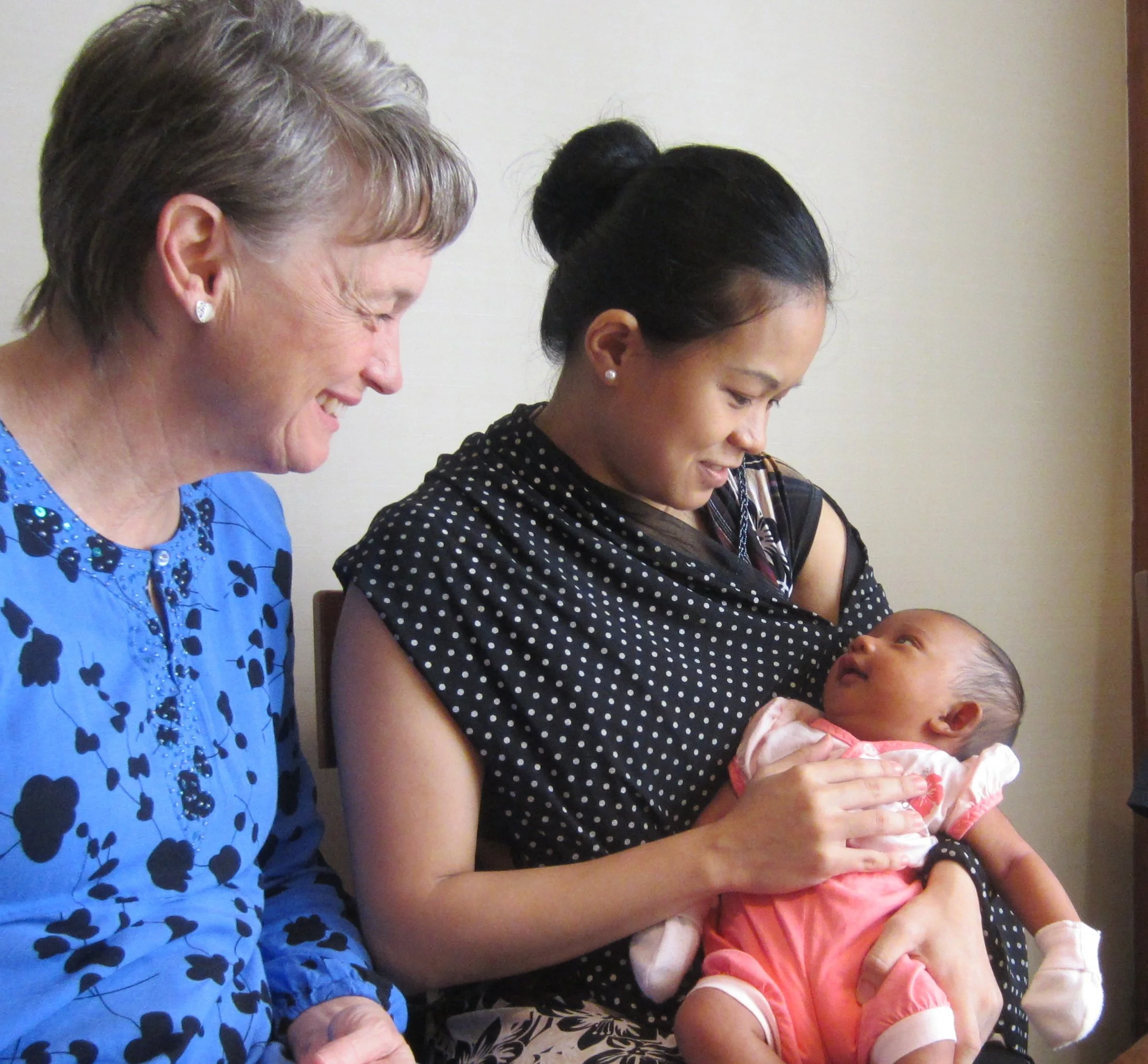
Jan Tedder, BSN, FNP, IBCLC presented “Sharing Baby’s Behavior (Responsive Parenting): A powerful tool for engaging, empowering and educating prenatal and postpartum families" at Injoy’s 2026 Summit. In order to facilitate the sharing of this information with students and parents, Jan created the resources below.
These resources are available to share AT NO CHARGE so you can decide if this information is useful to you. After December 15, 2026 you will have the option to purchase ongoing access to these resources.
These resources are available to share AT NO CHARGE so you can decide if this information is useful to you. After December 15, 2026 you will have the option to purchase ongoing access to these resources.
Follow directions below to share with your class or
Although each of you will develop your own way to integrate Responsive Parenting into your work, we suggest the following as a possible way to begin.
Introduction: Explain why you want to share this information with your students. The information below may be helpful.
Research shows Responsive Parenting benefits both babies AND parents. (References below.)
Child Development experts explain that during the first few years of a baby’s life more than one million brain connections are made every second! Every responsive back-and-forth interaction with a loved one encourages the effective maturing of a baby’s brain.
Responsive Parenting is associated with stronger cognitive, emotional, and social development in babies. These babies have enhanced attachment to their caregivers, increased breastfeeding rates, improved self-regulation and fewer behavioral problems over the years ahead.
Families who practice Responsive Parenting report greater confidence, less anxiety and lower rates of postpartum depression. They have enhanced couple communication, increased attachment to their baby and more breastfeeding success.
National and International organizations (ACOG, AAP, UNICEF, WHO) recommend families learn about Responsive Parenting during pregnancy and into early parenthood.
Video: Show Responsive Parenting, the ten-minute video. (https://vimeo.com/1208580463/c97cef19f5?fl=tl&fe=ec)
Teaching Exercise: Print out this Teaching Exercise on Responsive Parenting pdf of PowerPoint slides or download these PowerPoint slides to add to your teaching slides. Notes on the slides will help students experience the value of Responsive Parenting.
Handout: Click HERE to download and distribute to your students. This handout covers the Zones and SOSs (Signs of Over-Stimulation) reviewed in the video.
Feedback: (Jan and Debbie will add to website)
References:
a.Campi, E., Nye, E., & Baranek, G. (2025). Defining Parental Responsiveness: A Systematic Review–Based Theoretical Model. Journal of Infant and Child Development, 34(1), e2565.
b.Center on the Developing Child, Harvard University. (2026). Serve and Return. Retrieved from https://developingchild.harvard.edu/key-concept/serve-and-return/
c.Hahn-Holbrook, J., Little, E., & Abbott, M. (2021). Mothers are more sensitive to infant cues after breastfeeding compared to bottle-feeding human milk. Hormones and Behavior, 136, 105047.
d.Sokolovic, N., Rodrigues, M., Tricco, A., Dobrina, R., & Jenkins, J. (2021). Teaching Parents to be Responsive: A Network Meta-analysis. Pediatrics, 148(2), e202003356
If these resources enhance you current work, click HERE for information on purchasing ongoing use of the ten-minute “Responsive Parenting” video, Teaching Exercise on Responsive Parenting and the Digital Parent Resource Page.